
For strata managers, ensuring the safety of residents and compliance with fire safety regulations is a continuous and multifaceted responsibility. While attention often gravitates towards complex alarm systems and sprinkler networks, the humble fire extinguisher remains a crucial first line of defence against small fires. However, its effectiveness is entirely dependent on proper management throughout its lifecycle. At Promaster Protection, we understand that mastering the nuances of fire extinguisher care can seem daunting, but it’s essential for comprehensive fire safety.
This guide will break down the often-overlooked details of fire extinguisher management, from understanding different types and strategic placement to the critical importance of regular inspections, meticulous maintenance, and timely replacement.
Beyond the Red Can: Understanding Fire Extinguisher Types and Their Purpose
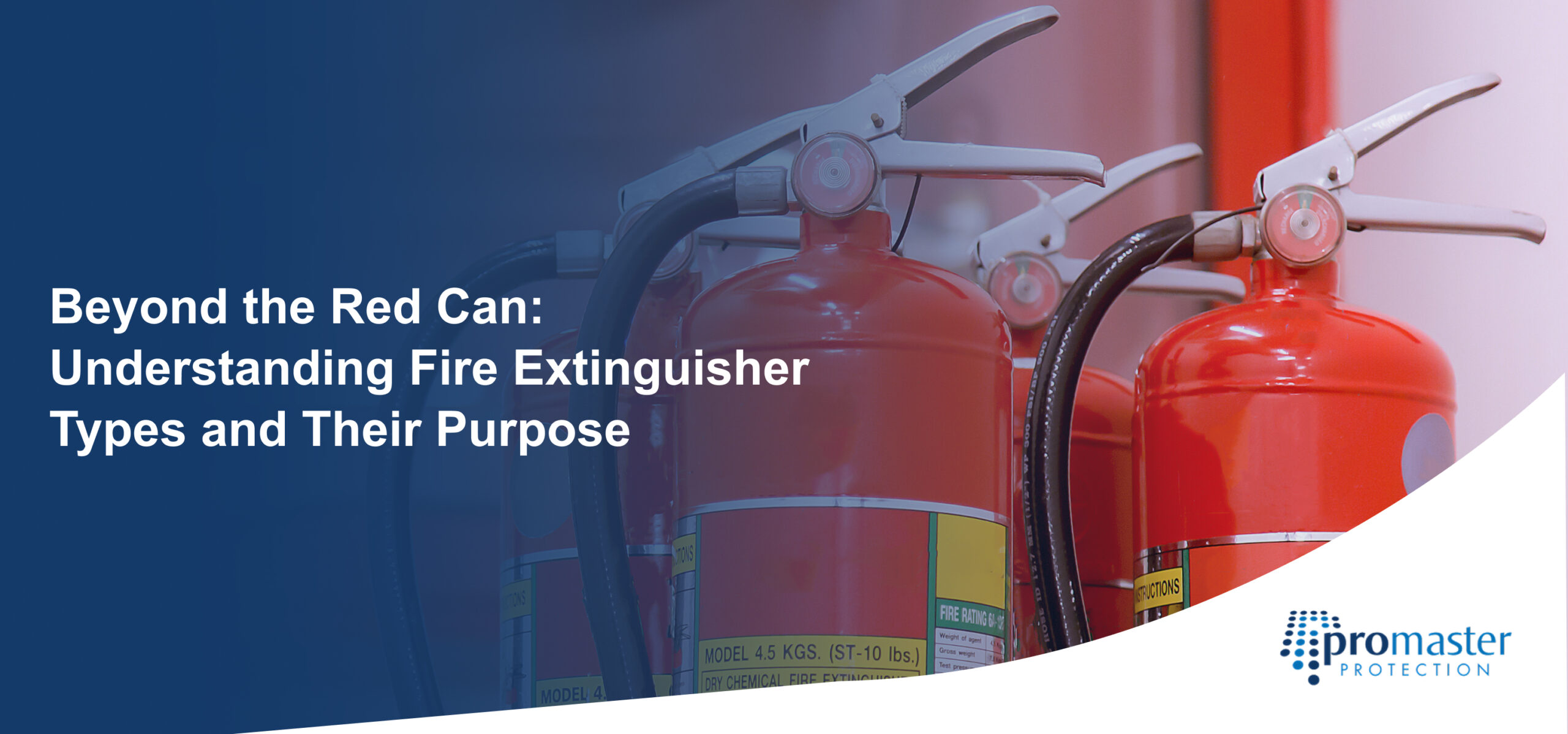
Not all fire extinguishers are created equal. Each type is designed to combat specific classes of fires, and having the right one in the right place is paramount:
- Water (Red): Ideal for Class A fires (wood, paper, textiles). Not suitable for electrical or flammable liquid fires.
- Foam (Red with a blue band): Versatile for Class A and B fires (flammable liquids like petrol, oils). Offers a cooling effect and seals the liquid surface.
- Dry Chemical Powder (DCP) / ABE (Red with a white band): The most common multi-purpose extinguisher, effective on Class A, B, and E fires (electrical). However, it can leave a corrosive residue.
- Carbon Dioxide (CO2) (Red with a black band): Primarily for Class E fires (electrical equipment) and Class B fires. They disperse quickly and leave no residue, making them suitable for sensitive electronics.
- Wet Chemical (Red with an oatmeal/light grey band): Specifically designed for Class F fires (cooking oils and fats in kitchens).
Understanding these distinctions is crucial for strata managers when assessing the needs of different areas within their buildings, such as common laundries, plant rooms, or kitchens in common areas.
Strategic Placement: More Than Just Hiding in a Corner
The effectiveness of a fire extinguisher is severely diminished if it’s not readily accessible and appropriately positioned. Key considerations for placement include:
- Visibility and Accessibility: Extinguishers should be highly visible and easy to access without obstructions. They are typically mounted on walls in designated areas.
- Proximity to Hazards: Place the correct type of extinguisher near potential fire hazards. For instance, a wet chemical extinguisher should be near a common kitchen, while a CO2 or DCP might be more suitable near an electrical room.
- Travel Distance: Regulations often specify maximum travel distances to an extinguisher. Ensuring adequate coverage across all floors and sections of the building is vital.
The Critical Lifecycle Stages: Inspection, Maintenance, and Replacement
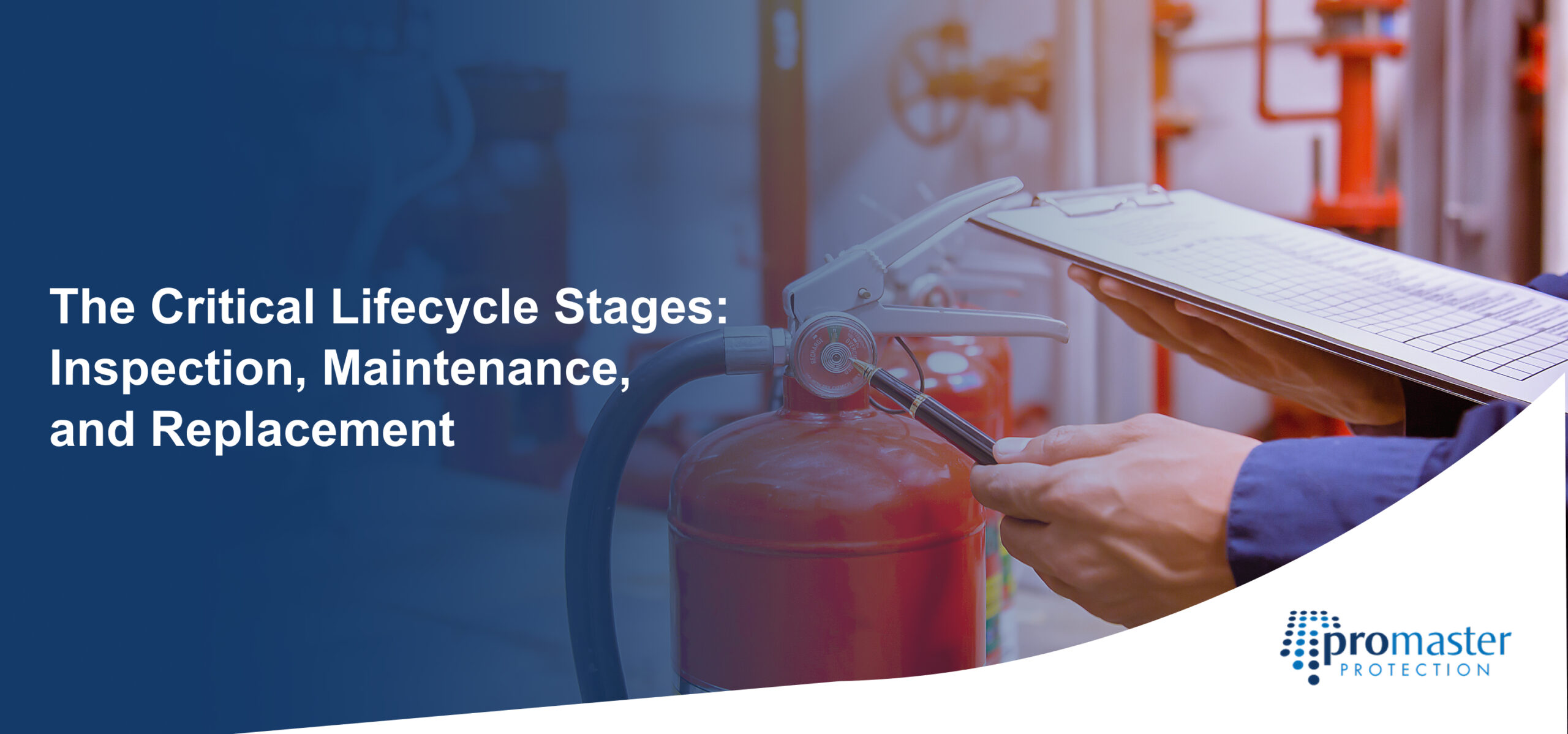
A fire extinguisher is not a “set and forget” item. Its operational readiness is maintained through a diligent lifecycle of checks:
Regular Visual Inspections (Monthly/Quarterly):
Strata Manager’s Role: While not requiring a certified technician, strata managers or their delegated staff should conduct routine visual checks.
What to Look For:
- Accessibility: Is it unobstructed and visible?
- Pressure Gauge: Is the needle in the green “charged” zone (if applicable)?
- Pin & Seal: Is the tamper seal intact and the pin present?
- Condition: No obvious signs of damage, corrosion, leaks, or a clogged nozzle.
- Last Service Date: Check the service tag to ensure it’s within the required period.
Annual Professional Maintenance (Service):
- Certified Technician Required: This is a comprehensive check performed by qualified fire protection technicians, like those at Promaster Protection.
- What it Involves: A thorough examination of all components, pressure testing (where applicable), weighing of CO2 extinguishers, and replacement of any faulty parts. The service tag will be updated. This ensures the internal integrity and readiness of the unit.
Hydrostatic Testing (Periodical Pressure Testing):
- Longer Interval: Typically required every 5 years for CO2 extinguishers and every 5 years for powder and water/foam extinguishers. This involves discharging, disassembling, internally inspecting, and pressure testing the cylinder to ensure its structural integrity.
- Why it’s Crucial: Over time, the internal pressure can weaken the cylinder.
Hydrostatic testing prevents dangerous ruptures and confirms the extinguisher can safely hold its charge.
Replacement:
- Beyond Maintenance: Even with regular maintenance, extinguishers have a finite lifespan. Dry chemical extinguishers, for example, often have a lifespan of around 10-20 years, depending on the manufacturer and specific type, regardless of maintenance, after which they must be replaced. CO2 extinguishers are subject to the 5-yearly hydrostatic test, and if they fail this or are damaged, they must be replaced.
- Damage or Failure: Any extinguisher that shows significant signs of corrosion, damage, or fails a professional test should be immediately taken out of service and replaced.
- Discharge: Even a partial discharge requires professional recharging and inspection. It cannot simply be put back in place.
The Promaster Protection Difference: Your Partner in Extinguisher Management
At Promaster Protection, we go beyond simply testing fire extinguishers. We offer comprehensive management services that ensure your strata property’s fire extinguishers are always compliant, fully operational, and ready for use when needed. Our certified technicians provide detailed reports, transparent communication, and expert advice, helping you navigate the complexities of extinguisher lifecycles and maintain a robust first line of defence.
Don’t let overlooked details compromise your building’s fire safety. Partner with Promaster Protection to ensure every fire extinguisher on your property is a reliable guardian, ready to act in an emergency.