
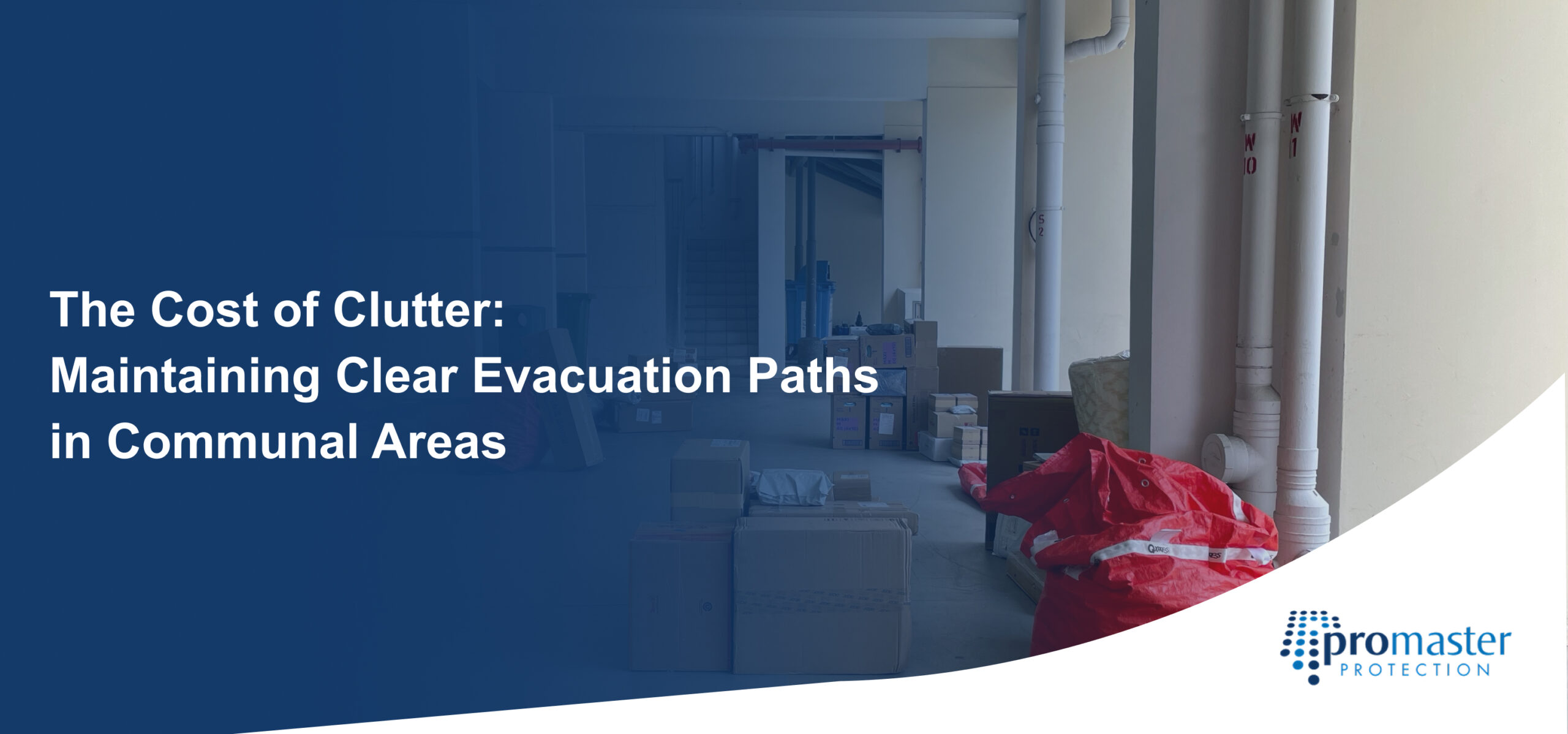
The Cost of Clutter: Maintaining Clear Evacuation Paths in Communal Areas
As a strata manager, property owner, or facility operator, you invest heavily in complex fire protection systems—sprinklers, alarms, and extinguishers.
Yet, one of the most critical safety features of any building is also the most basic: a clear path to the exit.
Clutter, whether in a strata hallway in Sydney or a corridor of a Newcastle retirement village, is a silent hazard that can render your expensive fire safety systems useless.
At Promaster Protection, we know that preventing tragedy is a commitment to continuous vigilance, and that starts with clear egress.
Here is why you must strictly enforce the rule against obstructions in communal areas.

Fire safety regulations mandate that corridors, stairs, and exit routes must be kept free of all obstructions.
- Blocking Exits: Items left in hallways—like abandoned furniture, temporary storage, or even holiday debris—can physically block the movement of residents towards an exit.
- Vulnerability in Aged Care: In settings like nursing homes or retirement villages (a key client type), obstructions are deadly. Staff must be able to rapidly move non-ambulant residents, often on specialised equipment or beds. A single box or laundry trolley in a corridor can prevent this crucial, life-saving movement.
- Slowing Emergency Services: Clutter slows the entry of Fire & Rescue NSW (FRNSW) personnel, delaying their ability to reach the source of the fire and assist residents.
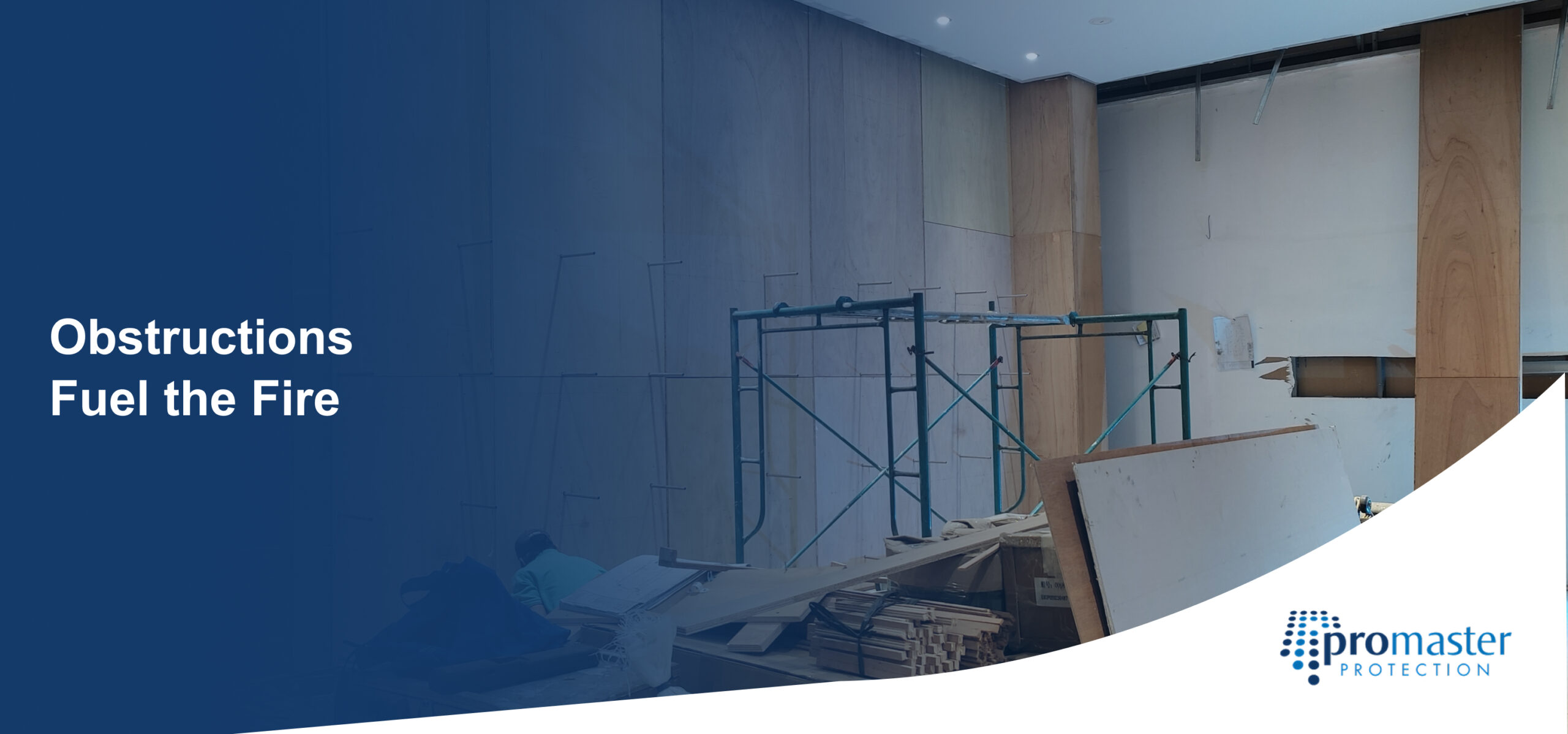
Materials left in corridors are often highly flammable, providing additional fuel for a fire that may have started elsewhere.
- Common Culprits: Cardboard boxes, old rugs, packaging materials, and discarded household items act as kindling.
- The Smoke Hazard: Even if the items don’t burn, they will contribute toxic smoke, which is the leading cause of fire-related fatalities.

Allowing obstructions in communal paths is a direct breach of fire safety regulations and can have severe consequences for the Owners Corporation.
- Non-Compliance: Allowing items to obstruct exits is a violation of building codes and can result in the failure of your Annual Fire Safety Statement (AFSS) inspection.
- Insurance Risk: In the event of an injury or fatality, an insurance claim could be denied if the Owners Corporation is found to have breached its duty of care by allowing evacuation paths to be obstructed.

Our commitment to professionalism and good communication extends to helping you enforce these rules.
- Clear Communication: Distribute clear, professional warnings to residents that explain the why—not just the what—of fire safety.
- Meticulous Inspection: Our technicians note any obstructions during routine inspection, testing, and maintenance (ITM) checks, providing managers with the documentation needed to rectify the issue promptly.
Don’t let clutter be the silent partner in a fire disaster. Enforcing clear evacuation paths is the most affordable, yet most critical, piece of your fire safety plan.
Contact Promaster Protection today for a comprehensive audit of your building’s evacuation paths and compliance status.